risport size guide

Risport Size Guide: A Comprehensive Overview (Updated 04/09/2026)
Navigating the world of figure skating boots requires precision‚ and Risport sizing is paramount for performance and comfort. This guide‚ updated today‚
provides detailed information‚
leveraging resources like the official Risport measurement guide and insights from figureskatingstore.com to ensure a perfect fit.
Understanding Risport Skate Sizing
Risport skate sizing differs significantly from standard shoe sizes‚ demanding a dedicated approach to achieve optimal performance. Unlike conventional footwear‚ figure skate sizing isn’t simply about length; width and volume play crucial roles. Risport employs a unique numbering system‚ often requiring conversion from US‚ UK‚ or European sizes.
The brand’s boots are meticulously crafted to provide a snug‚ supportive fit‚ essential for control and responsiveness on the ice. Accurate sizing minimizes discomfort‚ prevents blisters‚ and maximizes energy transfer. Understanding the nuances of Risport’s sizing philosophy – as detailed in their technical catalog – is the first step towards finding your perfect skate. Ignoring these specifics can lead to ill-fitting boots‚ hindering skill development and enjoyment.
Furthermore‚ different Risport models (Imperial‚ Elite‚ Nova‚ Antares) may exhibit slight variations in fit‚ necessitating model-specific considerations.
Why Accurate Risport Sizing Matters
Precise Risport sizing isn’t merely about comfort; it’s fundamentally linked to skating performance‚ injury prevention‚ and overall enjoyment. Ill-fitting skates compromise control‚ balance‚ and the ability to execute techniques effectively. Skates that are too large allow excessive foot movement‚ reducing responsiveness and power transfer.
Conversely‚ skates that are too small can cause painful pressure points‚ blisters‚ and even long-term foot damage. A proper fit ensures the skater’s energy is efficiently channeled into their movements‚ enhancing jumps‚ spins‚ and overall skating quality.
Furthermore‚ correctly sized boots provide the necessary ankle support crucial for preventing sprains and other injuries. Investing time in accurate measurement and understanding Risport’s sizing nuances – utilizing resources like the official measurement guide – is a vital investment in a skater’s progression and well-being.
Risport Sizing Charts & Methods
Explore comprehensive sizing charts and proven methods for finding your ideal Risport fit. We’ll detail general guidelines‚ the ICE-ROLLER measurement guide‚ and beginner-specific approaches.
Risport Sizing Chart – General Guidelines
Understanding the Risport sizing chart is the first step towards a comfortable and performance-enhancing skate fit; Generally‚ Risport sizing tends to run smaller compared to standard shoe sizes‚ necessitating careful measurement and consideration.
It’s crucial to remember that these are general guidelines‚ and individual foot shapes vary significantly. The charts provided by Risport (available in their technical catalog – Catalogo Tecnico A4 Risport ICE-ROLLER.pdf) offer a starting point‚ converting US/UK and European sizes to Risport’s specific scale.
However‚ relying solely on a chart isn’t sufficient. Factors like foot width‚ instep height‚ and even sock thickness play a vital role; Always prioritize accurate foot measurement (detailed in subsequent sections) over simply converting your usual shoe size. Figureskatingstore.com also provides a helpful Risport sizing chart as a secondary reference.
Using the Risport Measurement Guide (ICE-ROLLER)
The official Risport ICE-ROLLER measurement guide (Catalogo Tecnico A4 Risport ICE-ROLLER.pdf) is an invaluable tool for precise sizing. This guide details the correct method for measuring foot length and width‚ crucial for determining your optimal Risport skate size.
It emphasizes measuring both feet‚ as slight discrepancies are common‚ and using the larger measurement as your basis. The guide illustrates how to accurately trace your foot on paper‚ ensuring a snug outline. Pay close attention to the instructions regarding sock thickness – measure while wearing the socks you intend to skate in.
The ICE-ROLLER guide then correlates these measurements to specific Risport sizes‚ offering a more tailored recommendation than generic charts. Remember to download the latest version of the guide directly from Risport’s website to ensure you’re using the most up-to-date information.
Risport Sizing for Beginners
For those new to figure skating‚ accurate Risport sizing is even more critical. Ill-fitting skates can hinder skill development and cause discomfort‚ potentially discouraging participation. Beginners often overestimate their size‚ believing a looser fit is more comfortable – this is a misconception.
Start by meticulously following the foot measurement instructions outlined in the Risport ICE-ROLLER guide. Don’t rely on your usual shoe size‚ as skate sizing differs significantly. Consider seeking guidance from a professional skate fitter‚ especially if you’re unsure about the process.
A properly fitted skate should feel snug but not painful. There should be minimal heel lift‚ and your toes shouldn’t be cramped. Prioritize a secure fit that provides adequate support and control‚ laying the foundation for successful skating.
Measuring Your Feet for Risport Skates
Precise foot measurements are the cornerstone of successful Risport skate fitting. Utilizing the correct tools and following a step-by-step approach ensures optimal comfort and performance.
Tools Needed for Accurate Measurement
Achieving a precise measurement requires a few essential tools. First‚ a Brannock device is highly recommended for length and width measurements‚ offering superior accuracy compared to simple rulers. Alternatively‚ a ruler or measuring tape can be used‚ but ensure it’s a flexible one for conforming to your foot’s shape.
You’ll also need a sock similar to the thickness you’ll wear while skating – thin athletic socks are generally best. A pen or pencil is crucial for marking the heel and longest toe positions on paper. Finally‚ a piece of paper larger than your foot is needed to trace around‚ providing a visual reference for width assessment.
Accuracy is key; investing in a Brannock device will significantly improve the reliability of your measurements‚ ultimately leading to a better skate fit and enhanced skating experience.
Step-by-Step Foot Measurement Instructions
Begin by placing your foot flat on a piece of paper‚ wearing your skating sock. Ensure your heel is firmly against a wall. Trace around your foot carefully‚ keeping the pen perpendicular to the paper.
Next‚ locate the longest toe – it isn’t always the big toe! Measure the distance from the heel (where it touched the wall) to the tip of your longest toe in centimeters. For width‚ find the widest part of your foot tracing and measure across it.
Repeat these steps for both feet‚ as sizes can vary. Always use the measurement of the larger foot when determining your Risport size. Record both length and width accurately‚ as these measurements are crucial for selecting the correct skate.
Measuring Foot Length
Accurate foot length measurement is the cornerstone of Risport sizing. Place your foot flat on a piece of paper against a wall‚ wearing your typical skating sock. Trace your foot carefully‚ ensuring the pen remains vertical.
Measure the distance from the back of your heel (where it touched the wall) to the tip of your longest toe – this may not always be the big toe! Use a ruler or measuring tape‚ and record the measurement in centimeters.
It’s vital to measure both feet‚ as slight differences are common. Always utilize the larger foot’s measurement when referencing Risport sizing charts. Double-check your measurement for precision‚ as even small discrepancies can impact skate fit and performance.
Measuring Foot Width
Determining foot width is crucial for a comfortable and supportive Risport skate fit. After tracing your foot (as described in foot length measurement)‚ identify the widest part of your foot on the tracing.
Draw a straight line tangent to both sides of your foot at this widest point. Measure the distance between these two lines in centimeters. This measurement represents your foot width.
Pay close attention‚ as Risport skates cater to varying foot widths. Knowing your width helps determine if a standard width skate will suffice or if a wider or narrower option is necessary for optimal performance and to avoid discomfort. Record this measurement alongside your foot length for accurate sizing.
Risport Skate Models & Specific Sizing
Different Risport models‚ like Imperial‚ Elite‚ Nova‚ and Antares‚ exhibit unique sizing nuances. Understanding these variations is key to achieving a precise‚ performance-enhancing fit.
Risport Imperial vs. Risport Elite Sizing Differences
The Risport Imperial and Elite models‚ while both high-performance boots‚ present distinct sizing considerations for skaters. Generally‚ the Risport Elite tends to run slightly narrower than the Imperial‚ particularly in the heel and instep areas. This difference stems from the Elite’s design‚ geared towards skaters with a more streamlined foot shape‚ offering enhanced precision and control.
Skaters with wider feet may find the Imperial more accommodating‚ while those with narrower feet might prefer the secure fit of the Elite. It’s crucial to consult sizing charts specific to each model and‚ ideally‚ undergo a professional fitting. The Elite often requires a more precise heat molding process to achieve optimal comfort and performance‚ due to its snugger initial fit. Consider your foot volume and shape when choosing between these two popular Risport options.
Risport Nova Sizing Considerations
The Risport Nova is often recommended as an excellent boot for developing skaters‚ but accurate sizing is still critical for optimal performance and foot health. The Nova generally fits true to size according to Risport’s standard charts‚ however‚ it’s known to be a more forgiving boot in terms of width compared to the Imperial or Elite models.
This makes it a good starting point for skaters whose feet are still growing or who have a slightly wider foot. However‚ avoid assuming a larger size for “growing room‚” as this can compromise ankle support. Professional fitting is highly recommended‚ especially for younger skaters. Pay close attention to heel hold; a snug heel is essential. Remember to consider sock thickness during the fitting process to ensure a comfortable and secure fit within the Nova boot.
Risport Antares Sizing Recommendations
The Risport Antares is a popular choice for intermediate to advanced skaters‚ known for its enhanced support and responsiveness. Sizing the Antares requires careful consideration‚ as it tends to run slightly narrower than some other Risport models. Skaters with wider feet may need to consider heat molding or opting for a wider heat moldable liner.
It’s crucial to prioritize a snug‚ secure fit‚ particularly around the heel and ankle‚ to maximize power transfer and control. Unlike boots intended for beginners‚ the Antares doesn’t offer much forgiveness in sizing. Professional fitting is highly recommended to ensure the correct length and width. Always measure both feet‚ as discrepancies are common‚ and fit to the larger foot. Don’t rely on previous skate sizes‚ as Risport sizing can vary between models.
Converting Measurements to Risport Sizes
Accurate conversion is key to finding your Risport fit. Utilize charts to translate US/UK‚ European‚ and centimeter measurements into corresponding Risport sizes for optimal results.
US/UK to Risport Size Conversion
Converting from US or UK shoe sizes to Risport skate sizes requires careful attention‚ as there isn’t always a direct correlation. Risport sizing generally runs smaller than standard shoe sizes‚ meaning you’ll likely need to go up a half or even a full size.
Here’s a general guideline‚ but remember that individual models (like Imperial vs. Elite) can have slight variations. As a starting point:
- US Men’s 7 – Risport 24.5
- US Men’s 8 – Risport 25.5
- US Women’s 8 – Risport 24.5
- UK 6 – Risport 24.5
- UK 7 – Risport 25.5
It’s crucial to prioritize foot length measurement (see our measurement guide) over relying solely on your usual shoe size. This conversion chart serves as a preliminary guide; always cross-reference with the Risport sizing charts and consider your foot width for the most accurate fit. Professional fitting is highly recommended.
European to Risport Size Conversion
For skaters familiar with European (EU) shoe sizing‚ converting to Risport sizes requires a nuanced approach. Similar to US/UK conversions‚ Risport skates typically run smaller‚ necessitating an increase in size compared to your standard EU shoe size.
Here’s a general conversion guide to get you started:
- EU 38 – Risport 24.5
- EU 39 – Risport 25.5
- EU 40 – Risport 26.5
- EU 41 – Risport 27.5
However‚ relying solely on EU size isn’t sufficient. Foot length‚ measured in centimeters‚ is the most reliable indicator for accurate Risport sizing. Always consult the official Risport measurement guide (available on their website) and compare your foot length to their specific size charts. Remember that variations exist between Risport models‚ so checking model-specific recommendations is vital for optimal comfort and performance.
Centimeters to Risport Size Conversion
The most precise method for determining your Risport skate size involves measuring your foot length in centimeters. This eliminates the inconsistencies inherent in standard shoe sizing systems. Risport provides detailed measurement guides‚ readily available on their official website (risport.com)‚ to assist with this process.
Here’s a general guideline for converting centimeters to Risport sizes:
- 23.5 cm – Risport 24
- 24 cm – Risport 24.5
- 24.5 cm – Risport 25
- 25 cm – Risport 25.5
- 25.5 cm – Risport 26
Crucially‚ these are approximate values. Always refer to the official Risport sizing charts for the specific model you are considering‚ as slight variations can occur. Remember to measure both feet‚ as discrepancies are common‚ and size based on the larger foot. Prioritize accuracy for a comfortable and high-performing skating experience.

Addressing Common Risport Sizing Issues
Even with careful measurement‚ skaters sometimes encounter fit problems. This section details solutions for narrow/wide feet‚ skates feeling too tight or loose‚ ensuring optimal comfort.
Dealing with Narrow or Wide Feet
Risport skates generally accommodate a standard foot width‚ but variations exist. Skaters with notably narrow feet may find standard widths feel loose‚ potentially impacting control and responsiveness. Consider utilizing thinner socks or exploring options like tongue pads to take up excess volume within the boot.
Conversely‚ those with wider feet might experience pressure points and discomfort. Heat molding can often provide some relief by subtly expanding the boot’s shape. However‚ significant width discrepancies may necessitate exploring Risport models known for a wider last‚ or consulting a professional boot fitter about custom modifications‚ such as stretching‚ to achieve a truly personalized fit.
Remember‚ a snug but not constricting fit is ideal. Prioritizing comfort prevents blisters and ensures efficient power transfer during skating maneuvers. Don’t hesitate to seek expert advice for optimal results.
What to Do If Your Skates Feel Too Tight
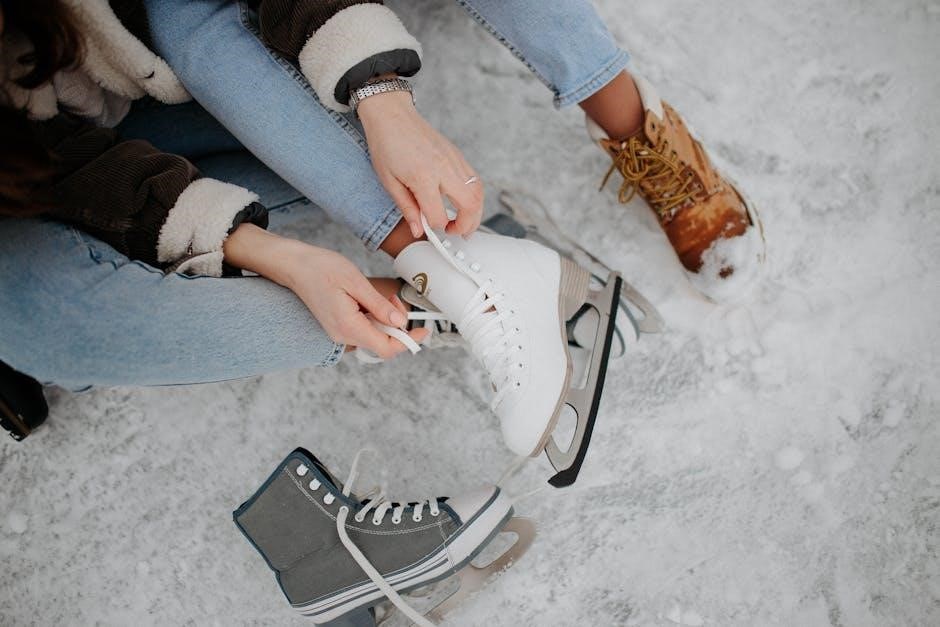
If your Risport skates feel uncomfortably tight‚ immediate action is crucial to prevent blisters and potential foot damage. First‚ ensure you’re wearing the appropriate sock thickness – overly thick socks exacerbate tightness. Attempt to gently work the skates while wearing them‚ flexing your feet to encourage slight expansion.
Heat molding‚ performed by a qualified professional‚ is often the most effective solution. This process softens the boot’s material‚ allowing it to conform more closely to your foot’s shape. Avoid attempting heat molding at home‚ as improper technique can cause irreversible damage.
If tightness persists‚ consult a boot fitter. They can assess the fit and recommend further adjustments‚ such as tongue modifications or stretching. Ignoring persistent tightness can lead to long-term discomfort and hinder performance.
What to Do If Your Skates Feel Too Loose
Experiencing looseness in your Risport skates compromises control and responsiveness. Initially‚ check your lacing technique – ensure laces are snug throughout the boot‚ particularly around the ankle and instep; Experiment with different lacing patterns to find what provides optimal support.
Consider adding tongue pads or heel grips. These inexpensive inserts take up excess volume‚ creating a more secure fit. Professional boot fitting is highly recommended for persistent looseness. A fitter can assess the issue and suggest more advanced solutions.
Heat molding can sometimes help tighten a boot‚ but it’s less effective for significant looseness. Avoid over-tightening laces‚ as this can create pressure points. Addressing looseness promptly is vital for maintaining proper skating technique and preventing injuries.

Additional Risport Sizing Tips
Remember to account for sock thickness and potential growth in children’s feet. Seeking professional fitting advice ensures optimal comfort and performance with Risport skates.
Considering Sock Thickness
The thickness of your skating socks significantly impacts the fit of your Risport skates. Thin‚ technical socks designed for skating are ideal for a precise fit‚ minimizing bulk and maximizing feel. However‚ skaters often prefer thicker socks for added warmth or cushioning‚ particularly in colder environments.
When measuring your feet‚ always wear the socks you intend to skate in. Adding thicker socks will require a slightly larger skate size to avoid constriction and discomfort. Conversely‚ switching to thinner socks may necessitate a smaller size. It’s crucial to replicate your typical skating setup during the measurement process.
Experimenting with different sock weights can fine-tune the fit‚ but avoid overly bulky socks that compromise control and responsiveness. Prioritize a snug‚ secure fit without excessive pressure points. Remember‚ a properly fitted skate allows for optimal power transfer and maneuverability on the ice.
Sizing for Growing Feet (Children)
Sizing skates for children presents unique challenges due to rapidly changing foot size. It’s tempting to buy skates “too big” to accommodate growth‚ but this can be detrimental to technique and safety. A skate that’s too large offers insufficient support‚ hindering proper control and potentially leading to blisters or injuries.
Prioritize a snug fit with approximately 1/2 inch (1.27 cm) of growth room. Regular foot measurements – every 2-3 months – are essential. Consider adjustable skates or boots with removable insoles to provide some flexibility. Avoid purchasing skates significantly larger than the current foot size;
Trade-in programs or resale options can be cost-effective as children quickly outgrow their skates. A professional skate fitting is highly recommended to ensure the best possible fit and support for developing skaters. Focus on fit over future size‚ prioritizing performance and safety now.
Professional Skate Fitting Recommendations
Seeking a professional skate fitting is the most reliable path to accurate Risport sizing‚ especially for beginners or those experiencing fit issues. Experienced fitters utilize specialized tools and techniques to assess foot dimensions‚ including length‚ width‚ and instep height.
A proper fitting goes beyond simply measuring your feet; it considers your skating level‚ discipline‚ and individual foot shape. Fitters can identify potential problem areas and recommend specific Risport models best suited to your needs. They’ll also evaluate the overall feel of the boot‚ ensuring adequate support and comfort.
Don’t hesitate to visit a reputable skate shop with certified fitters. They can guide you through the process‚ answer your questions‚ and help you select the perfect Risport skates for optimal performance and enjoyment on the ice. Investing in a professional fitting is an investment in your skating future.