shema transliteration pdf

The Shema transliteration PDF offers a clear, accessible format for studying the central declaration of faith. By converting Hebrew text into Latin letters, learners can pronounce verses accurately while preserving original meaning. This resource supports both casual readers and scholars alike.Enjoy.

Background of Shema Prayer
The Shema, rooted in biblical law, is a cornerstone of Jewish identity. Its verses, found in Deuteronomy 6:4‑9, emphasize monotheism and devotion. Historically, the prayer has guided daily worship, study, and communal rituals across centuries. It remains core today!!
Historical Context
Shema transliteration PDFs serve as bridges between ancient Hebrew script and modern learners, enabling accurate pronunciation while preserving the text’s sacred rhythm. The practice of transliteration dates back to early rabbinic scholars who sought to teach non‑Hebrew‑speaking communities. Over centuries, various systems emerged—some favoring phonetic fidelity, others prioritizing ease for English speakers. Today, digital tools allow instant conversion, and PDFs provide a portable, printable format that can be shared across classrooms, synagogues, and study groups. By embedding the transliterated text alongside the original Hebrew, users can compare phonetics with orthography, deepening their understanding of linguistic nuances. Moreover, the PDF format supports annotations, hyperlinks to commentaries, and embedded audio files, enriching the learning experience. For educators, a well‑designed PDF can be integrated into curricula, ensuring consistency in teaching the Shema’s core message: “Hear, O Israel, the Lord is our God, the Lord is one.” This concise yet profound declaration anchors Jewish faith, and the transliteration PDF makes it accessible to anyone, anywhere, at any time.
In addition, the PDF format allows educators to embed quizzes or reflection prompts, enhancing engagement. Users can annotate on the PDF, highlighting key phrases or personal insights. This dynamic approach supports diverse learning styles, ensuring the Shema remains a living, breathing part of devotion daily!
Textual Variants
Shema transliteration PDFs must reflect the diversity of Hebrew manuscripts that have survived through millennia. The most widely cited version originates from the Masoretic Text, which standardizes vowel points and cantillation marks. However, early Dead‑Sea Scrolls reveal subtle differences in phrasing, such as the omission of the word “אֲנִי” in certain passages or the placement of the word “אֶחָד” in the final verse. These variations are crucial for scholars who compare textual traditions, and they influence how transliteration systems render consonants and vowels. Some transliteration schemes, like the ALA‑Biblical system, prioritize phonetic accuracy, while others, such as the Hebrew Academy of Jerusalem system, aim for readability for English speakers. PDF creators should therefore decide whether to present a single, standardized transliteration or to include multiple variants side‑by‑side, perhaps in footnotes or appendices. This approach allows users to see how the same Hebrew word can be rendered differently, fostering a deeper appreciation for the text’s linguistic richness. In practice, many PDF templates include a “Variant” column that lists alternative transliterations, enabling comparative study without cluttering the main body of the document. By incorporating these options, a Shema transliteration PDF becomes a versatile tool for both casual readers and advanced scholars.
Such PDFs embed audio files that play the Shema with cantillation, learners match transliteration with melody. This approach enhances retention and deepens spiritual connection.
Significance in Jewish Practice
In Jewish liturgy, the Shema is recited twice daily, marking the core of faith. A transliteration PDF allows non‑Hebrew speakers to participate fully, ensuring the words “Hear, O Israel” are pronounced correctly. The PDF format preserves line breaks, cantillation marks, and optional transliteration, making it suitable for study in synagogues, yeshivas, and home study. By aligning the Hebrew text with its Latin counterpart, learners can internalize the rhythm and meaning, fostering a deeper spiritual connection. The PDF can be printed on small sheets for personal use or displayed on screens during services, enabling congregants to follow along in real time. Additionally, educators use the PDF to teach pronunciation and grammar, while parents share it with children learning Hebrew. The accessibility of a PDF also supports interfaith dialogue, allowing visitors to understand the Shema’s significance without prior knowledge of Hebrew. In modern times, digital PDFs are shared via email, social media and synagogue websites, expanding reach beyond the physical synagogue. This widespread availability strengthens communal identity and continuity, ensuring that the Shema remains a living, central element of Jewish worship across generations. PDF files can be annotated with footnotes for deeper study, allowing learners to explore nuances without leaving the digital format. Users can also print the PDF in color, enhancing visual appeal for classroom settings. The PDF format supports accessibility features. PDF files are us for study.

Transliteration Basics
Transliteration bridges Hebrew script to Latin letters, aiding pronunciation and comprehension. It preserves phonetic nuance while keeping original meaning. Common systems like ISO 259 or the Chabad method balance accuracy with readability, making the Shema accessible worldwide!
Purpose of Transliteration
Transliteration bridges Hebrew script and Latin letters, enabling those who cannot read Hebrew to pronounce the Shema prayer accurately. By mapping each Hebrew letter to a Latin equivalent, it preserves the original rhythm, vowel sounds, and syntactic flow, keeping theological nuance while improving accessibility. This is especially valuable for diaspora communities, students, and interfaith scholars who wish to study the text without mastering Hebrew orthography. Transliteration also aids digital encoding, making the Shema searchable and shareable across platforms, including PDFs where Hebrew fonts may be limited. In classrooms, teachers can use transliteration in worksheets and audio recordings to allow learners to pronounce verses correctly and internalize the prayer’s meaning. For personal devotion, transliteration empowers individuals to recite the Shema aloud, deepening spiritual connection and reinforcing memory. It also supports comparative analysis, letting scholars align Hebrew and Latin texts to spot variations and traditions. Ultimately, transliteration democratizes access to this foundational declaration, ensuring the Shema’s message reaches people worldwide and inviting a broader audience to participate in its timeless affirmation. By adopting standardized transliteration, scholars laypeople can compare textual variants, trace shifts, engage in dialogue about the Shema’s role in faith worldwide! Its use in modern tech ensures seamless integration across devices worldwide today!!
Common Transliteration Systems
Several transliteration schemes are widely used for rendering the Shema into Latin letters, each balancing phonetic fidelity, readability, and scholarly precision. The most prominent include the ALA-LC system, the ISO 259 standard, the Buckwalter transliteration, and the simplified “English‑style” approach favored by many prayer books. ALA‑LC, developed by the American Library Association and the Library of Congress, assigns distinct Latin symbols to Hebrew consonants and vowel points, enabling accurate academic citation while remaining approachable for general readers. ISO 259, an international standard, offers a more rigorous mapping that preserves diacritics and is often employed in linguistic research. Buckwalter, originally designed for computational parsing, uses a compact set of ASCII characters, making it ideal for digital text processing and searchability. The English‑style system, meanwhile, prioritizes ease of pronunciation for English speakers, often omitting diacritics and simplifying vowel representation, which makes it popular in prayer guides and online resources. Each system’s choice depends on context: scholars favor ISO 259 for textual criticism, while lay practitioners lean toward ALA‑LC or the simplified version for daily devotion. Understanding these variations helps users select the most suitable transliteration for study, recitation, or digital dissemination, ensuring that the Shema’s profound message remains both accurate and accessible across cultures and languages.
Challenges in Transliteration
Additional considerations include font choice, as certain typefaces may obscure diacritics, and the right‑to‑left ordering, both of which affect legibility and fidelity in a PDF!!!.

Creating a PDF with Shema Transliteration
Creating a PDF of the Shema transliteration involves gathering the transliterated text, choosing a suitable font that preserves diacritics, and using a word processor or LaTeX to format the verses. Export the final document as PDF for easy sharing and printing. Use PDF readers to annotate. for study.re
Tools and Software Options
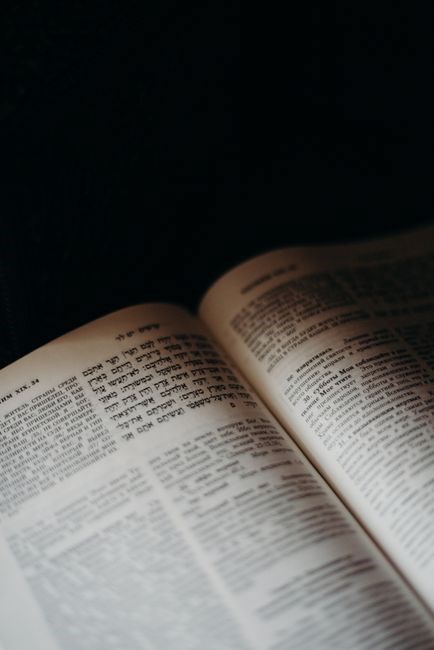
For a quick, user‑friendly workflow, Microsoft Word and Google Docs are ideal. Both support PDF export, right‑to‑left layout, and custom fonts such as “SBL Hebrew” or “David.” These fonts preserve diacritics, ensuring the transliteration stays true to the original text.
LaTeX offers precise typesetting. Using XeLaTeX or LuaLaTeX with the polyglossia package lets you embed OpenType fonts that handle Hebrew and Latin scripts simultaneously. Automatic hyphenation and right‑to‑left support make it perfect for complex layouts.
Graphic designers may prefer Adobe InDesign or Scribus. These tools provide multi‑column layouts, decorative borders, and the ability to embed QR codes linking to audio. Exporting to PDF preserves all design elements across devices.
Lightweight, cross‑platform solutions like PDFCreator or the built‑in “Print to PDF” feature on Windows and macOS convert any document into a PDF quickly. They are especially handy when converting pre‑formatted text from online sources such as the Chabad Shema page, keeping hyperlinks and images intact.

After choosing a tool, verify that the PDF retains right‑to‑left orientation, font embedding, and accurate transliteration. With the right software and best practices, you can produce a polished, shareable PDF suitable for study and devotion.
Additionally, embed metadata—author, title, keywords—to improve searchability. Add alt text to images and use proper heading levels for accessibility, ensuring the PDF meets standards!!
Formatting Tips for Legibility
When crafting a Shema transliteration PDF, clarity is paramount. Start by choosing a clean, sans‑serif font such as Arial or Helvetica for the Latin transliteration, and pair it with a legible Hebrew font like SBL Hebrew or David. Set the body text to 12–14 pt for the Latin portion and 10–12 pt for the Hebrew, ensuring the two scripts are visually balanced. Use a left‑to‑right layout for the transliteration and a right‑to‑left layout for the Hebrew, placing them side‑by‑side or stacking them with clear headings. Maintain ample line spacing—1.5 lines for the transliteration and 1.2 lines for the Hebrew—to avoid crowding. Highlight key phrases by bolding the Hebrew and italicizing the transliteration, or vice versa, to guide the reader’s eye. Insert a small margin (1 in on all sides) and use a narrow column width (6 in) to keep the text centered and easy to read. Add page numbers in the footer, and consider a subtle watermark of the Shema symbol to reinforce identity. Finally, embed the PDF with full font embedding and set the PDF/A standard for archival stability, ensuring that future readers see the same layout regardless of software. By following these formatting guidelines, the resulting PDF preserves the sanctity of the Shema while enhancing accessibility for learners worldwide. This method also aids teachers by providing a simple format!!.

Exporting and Sharing the PDF
Once the Shema transliteration PDF is finalized, the next step is to export it in a universally compatible format. Most word processors and PDF generators allow you to “Save As” or “Export” to PDF directly; choose the highest quality setting and enable “Embed all fonts” to preserve the Hebrew and Latin characters. After exporting, verify the file by opening it on multiple devices—desktop, tablet, and smartphone—to ensure consistent rendering; If the PDF is intended for academic or communal use, consider adding a watermark or a small logo in the corner to indicate authorship and prevent unauthorized duplication. For sharing, email the PDF as an attachment, but be mindful of size limits; compress the file using tools like Adobe Acrobat’s “Reduce File Size” or free online services that maintain quality. Alternatively, upload the PDF to a cloud storage platform such as Google Drive, Dropbox, or OneDrive, and generate a shareable link with view‑only permissions. This approach allows recipients to download the file without altering it. If you wish to embed the PDF on a website, use an